


We are nearing the end of the first quarter of the year.
In many organizations, this is the point when the priorities that felt clear in January begin competing with the daily demands of running the business. Initiatives that once felt urgent gradually lose space on the agenda. Strategic conversations slowly give way to operational updates.
And without anyone intentionally choosing it, leadership attention begins to move away from what once felt most important.
Leaders call this many things: competing priorities, bandwidth, or changing realities.
But in my work with executive teams, I often call it something simpler:
Drift.
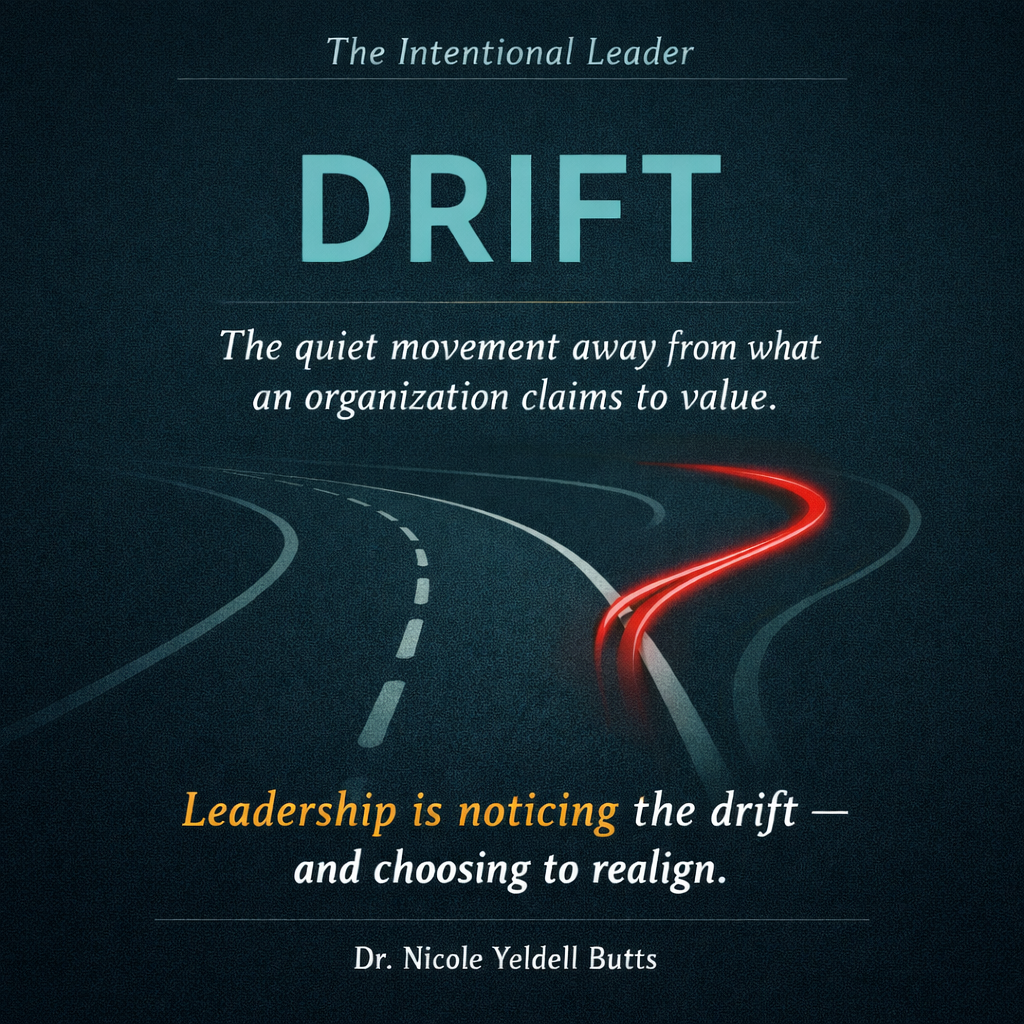
Drift is the quiet movement away from what an organization claims to value.
The Hidden Risk of Drift
No organization sets out to move away from its values, strategy, or purpose. Yet it happens all the time.
Not because leaders don’t care. But because operational gravity is powerful.
Operational demands crowd out reflective leadership. Metrics replace meaning. Dashboards replace dialogue.
In my research and leadership work, I have seen this pattern repeatedly: leaders spending the majority of their time in tactical execution instead of strategic reflection.
And when reflection disappears, drift begins.
Over time, that drift begins shaping culture—because organizations inevitably move in the direction of where leaders place their attention.
The Leadership Reset
Preventing drift doesn’t require a major strategic overhaul. Often it simply requires a moment of intentional pause.
Three questions I often ask leadership teams are:
- What did we say mattered most this year?
- Where has our time and energy actually gone?
- What small shift would bring those two things back into alignment?
These questions are deceptively simple. But they create space for leaders to reconnect with what truly matters.
In many ways, this kind of pause is the first step in the SHIFT leadership framework I teach leaders: stepping back long enough to see clearly where you are before deciding how to move forward.
Reflection for Leaders
As you move into the next phase of the year, consider:
Where might drift be quietly showing up in your organization — in priorities, behaviors, or decisions?
And what conversation might bring your team back into alignment?
Return
Intentional leadership is not about perfect execution.
It is about continually returning to what matters most.
And sometimes that return begins with simply noticing the drift.
An Invitation to SHIFT
If you or your leadership team are navigating questions of alignment, purpose, or culture, I offer a limited number of executive coaching engagements each year. I invite you to schedule a complimentary, no-obligation conversation to see whether that support might be helpful.